EDITORIAL
Hemophilia in words: an educational crossword puzzle to raise awareness and learn
Hemofilia en palabras: crucigrama educativo para sensibilizar y aprender
Erennys Carema Sarabia Águila 1*, https://orcid.org/0000-0003-3143-201X
Dunia de la Caridad Castillo González 1, https://orcid.org/0000-0002-4953-9440
Pablo Enrique Quintero Álvarez 1, https://orcid.org/0000-0002-9823-1784
1 Institute of Hematology and Immunology. Havana, Cuba.
* Corresponding author: caremasarabiaaguila@gmail.com
Received: 20/11/2025
Accepted: 15/02/2026
How to cite this article: Sarabia-Águila EC; Castillo-González DdlC; Quintero-Álvarez PE. Hemophilia in words: an educational crossword puzzle to raise awareness and learn. MedEst. [Internet]. 2026 [cited access date]; 6:e486. Available in: https://revmedest.sld.cu/index.php/medest/article/view/486
Dear readers:
Every April 17th, at the initiative of the World Federation of Hemophilia, World Hemophilia Day is commemorated in honor of the birthday of its founder, Frank Schnabel. (1) This date aims to raise awareness about this disease—a genetic and hereditary disorder caused by a deficiency or absence of clotting factors VIII and IX—to educate the community, and to promote the exchange of scientific knowledge aimed at improving the quality of life of patients. (1, 2)
In this context, and recognizing the need for educational approaches that go beyond the mere transmission of information to incorporate the voices of those affected, the Hemophilia Section of the Cuban Society of Hematology and the Institute of Hematology and Immunology of Cuba launched the “Raise Awareness about Hemophilia” contest. (Figure 1)
This initiative is based on the growing scientific consensus on the importance of community-based participatory research, which validates experiential knowledge as an essential input for designing more effective and culturally relevant health interventions.
According to the authors, the activity consisted of creating an acrostic using the word HEMOPHILIA arranged vertically, in which each horizontal term had to reflect some aspect related to the disease, from clinical management to the experiences and emotional needs of patients and their families.
In contrast to the traditional unidirectional approach—from the professional to the patient—qualitative methodologies like this one allow us to capture the psychosocial complexity of chronic diseases, generating valuable data for medical anthropology and health psychology.
To this end, a participatory activity was developed that combined an in-person meeting with the online submission of acrostics based on the word "HEMOPHILIA". The objective was to identify, through thematic content analysis, the core constructs that define the hemophilia experience from an emic (internal) perspective, and subsequently develop an educational crossword puzzle based on these findings.
Thirty-seven people participated. The analysis revealed two main dimensions. On the one hand, clinical and management concepts: "factor VIII," "emicizumab," "hematology," "zero bleeding," and "inhibitors," which demonstrated a remarkable level of technical knowledge among the participants, reflecting the effectiveness of therapeutic education programs. On the other hand, psychosocial and experiential dimensions emerged strongly: "family"—which underscores its supportive role and the hereditary nature of the disease—"love," "pain," "hematoma," and "hemarthrosis." This dichotomy not only validates the biopsychosocial model applied to hemophilia but also identifies the semantic markers that the community uses to narrate its relationship with the disease, crucial information for improving clinical communication and psychosocial support.
The scientific relevance of this initiative lies in its methodology, which operates as a low-cost, highly accessible narrative capture device, enabling the triangulation of perceptions among patients, families, and professionals. The final product, a crossword puzzle integrating these terms, transcends its recreational function to become an educational tool validated by the community, promoting meaningful and contextualized learning that can improve treatment adherence and health literacy.
We recommend the systematic implementation and evaluation of this type of participatory methodology in the design of educational materials. Its potential to generate qualitative evidence applicable to improving clinical practice, health education, and person-centered health policies makes it a line of research with a tangible impact on the quality of life of patients with chronic diseases.
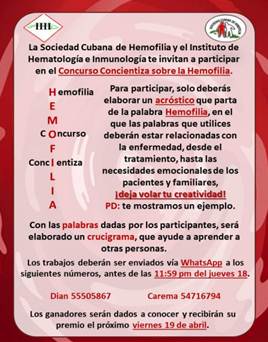
Figure 1. Call for entries for the "Raise awareness about hemophilia" contest".
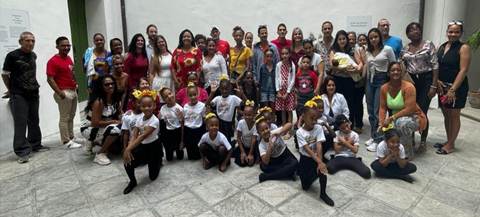
Figure 2. Participants in the commemorative activity for World Hemophilia Day. Alejandro de Humboldt Museum, Havana, Cuba; April 14, 2024.
BIBLIOGRAPHIC REFERENCES
1. García de Insausti CL. A propósito de la hemofilia. ¡Tanto sufrimiento merece un final ético!. Gac Méd Caracas [Internet]. 2022 [cited 25/09/2025]; 130(1):178-81. Available in: http://saber.ucv.ve/ojs/index.php/rev_gmc/article/view/23602
2. Ramos-Ramos G, Jiménez-Bonilla R. Nuevos paradigmas en la hemofilia. AMC [Internet]. 2023 [cited 25/09/2025];65(2):1-4. Available in: http://actamedica.medicos.cr/index.php/Acta_Medica/article/view/1325
CONFLICTS OF INTEREST
The authors declare that there are no conflicts of interest.
USE OF ARTIFICIAL INTELLIGENCE
The author declare that no artificial intelligence was used in the writing of this manuscript.