BRIEF COMMUNICATION
Mass poisoning due to consumption of Datura stramonium for the purpose of abuse
Intoxicación masiva por consumo de Datura stramonium con fines de abuso
Jurek Guirola Fuentes 1*, https://orcid.org/0000-0003-2441-4913
Yaisemys Batista Reyes 1, https://orcid.org/0000-0002-9640-6341
Yamilet García González 2, https://orcid.org/0000-0002-0361-3668
Yailin Morera Galván 3, https://orcid.org/0000-0003-4772-6856
1 Army Military Hospital “Dr. Mario Muñoz Monroy”. Order of Carlos J. Finlay. Matanzas, Cuba.
2 National Toxicology Center. La Habana, Cuba.
3 University of Medical Sciences of Matanzas. Faculty of Medical Sciences of Matanzas “Dr. Juan Guiteras Gener”. Matanzas, Cuba.
* Corresponding author: yuriguirolaf82@gmail.com
Received: 20/01/2026
Accepted: 10/03/2026
Published: 13/03/2026
How to cite this article: Guirola-Fuentes J; Batista-Reyes Y; García-González Y; Morera-Galván Y. Mass poisoning due to consumption of Datura stramonium for the purpose of abuse. MedEst. [Internet]. 2026 [cited access date]; 6:e512. Available in: https://revmedest.sld.cu/index.php/medest/article/view/512
ABSTRACT
Introduction: The consumption of Datura stramonium for abuse purposes constitutes an emerging health problem in developing countries, where economic limitations favour the use of low-cost hallucinogenic substances. Mass poisoning by this plant can generate emergency situations with high mortality due to its severe anticholinergic effects.
Objective: To characterize patients affected by mass poisoning resulting from the consumption of Datura stramonium for abuse purposes.
Methods: A descriptive, cross-sectional, retrospective study was conducted on a series of 21 cases treated in 2021 in Angola. The medical records of acute poisoned patients from two mass casualty events were reviewed. The variables studied included: mass casualty event, age, personal pathological history, clinical manifestations, and evolution. Absolute and relative frequencies were used as summary measures.
Results: The province of Luanda concentrated the highest number of cases (n=15; 71.4%). The 11-20 years age group was the most affected (n=9; 42.8%). Arterial hypertension was the most frequent pathological history (n=5; 23.8%), although apparently healthy patients predominated (n=15; 71.4%). Drug abuse prevailed among toxic habits (n=20; 95.2%). Severe clinical manifestations were observed in most patients (n=16; 76.1%), including seizures, deep coma, ventricular arrhythmias, and hypertensive crises. The evolution was unfavourable in 13 of 15 patients treated in the capital.
Conclusions: Mass poisoning from the consumption of Datura stramonium for abuse purposes constitutes a preventable health problem with high lethality.
Keywords: Substance abuse; Datura stramonium; Mass poisoning; Plant poisoning
RESUMEN
Introducción: El consumo de Datura stramonium con fines de abuso constituye un problema de salud emergente en países en desarrollo, donde las limitaciones económicas favorecen el uso de sustancias alucinógenas de bajo costo. La intoxicación masiva por esta planta puede generar situaciones de emergencia con alta mortalidad debido a sus efectos anticolinérgicos severos.
Objetivo: Caracterizar los pacientes afectados por intoxicación masiva consecuente al consumo de Datura stramonium con fines de abuso.
Métodos: Se realizó un estudio descriptivo, transversal y retrospectivo de una serie de 21 casos atendidos en 2021 en Angola. Se revisaron las historias clínicas de pacientes intoxicados agudos provenientes de dos eventos masivos. Las variables estudiadas incluyeron: evento masivo, edad, antecedentes patológicos personales, manifestaciones clínicas y evolución. Se utilizaron frecuencias absolutas y relativas como medidas de resumen.
Resultados: La provincia de Luanda concentró el mayor número de casos (n=15; 71,4 %). El grupo de edades 11-20 años fue el más afectado (n=9; 42,8 %). La hipertensión arterial fue el antecedente patológico más frecuente (n=5; 23,8 %), aunque predominaron los pacientes aparentemente sanos (n=15; 71,4 %). El consumo de drogas de abuso prevaleció entre los hábitos tóxicos (n=20; 95,2 %). Se constataron manifestaciones clínicas graves en la mayoría de los pacientes (n=16; 76,1 %), incluyendo convulsiones, coma profundo, arritmias ventriculares y crisis hipertensivas. La evolución fue desfavorable en 13 de 15 pacientes atendidos en la capital.
Conclusiones: La intoxicación masiva por consumo de Datura stramonium con fines de abuso constituye un problema de salud prevenible con alta letalidad.
Palabras clave: Abuso de sustancias; Datura stramonium; Intoxicación masiva; Intoxicación por planta
INTRODUCTION
Substance abuse is one of the fastest-growing public health problems worldwide, encompassing legal drugs (alcohol and tobacco), over-the-counter drugs, illegal or controlled substances, as well as plants with psychoactive properties.(1,2) In developing countries, economic constraints favor the use of low-cost substances, including readily available hallucinogenic plants.(3)
Mass poisoning is defined as a toxic event related to recent exposure to potentially toxic doses of a substance, resulting in five or more people suffering acute intoxication in the same location and from the same causative agent; depending on the magnitude and type of substance, it can generate a chemical emergency. (4)
According to the World Health Organization, half a million people die annually from consuming poisonous plants, with children being the most affected. The consumption of toxic plants accounts for 1-2% of all acute poisonings worldwide, with accidental oral ingestion predominating in men. (5,6)
Datura stramonium is an annual plant of the Solanaceae family, with cylindrical stems up to 1 m tall, alternate petiolate leaves with an oval outline, and inflorescences with white, pale yellow, or violet flowers (Figure 1). (5,6) Its toxic effects are due to anticholinergic tropane alkaloids (atropine, hyoscyamine, anisodamine, and scopolamine), with the highest concentration in the seeds (0.1 mg or 3-6 mg of atropine per 50-100 seeds). (7) The anticholinergic syndrome it produces includes: hot, dry, and flushed skin; bilateral mydriasis; tachycardia and arrhythmias; decreased mucous secretions; constipation, paralytic ileus, and urinary retention; as well as agitation, disorientation, hallucinations, delirium, seizures, and coma. (5,6,7)
Acute poisoning by D. stramonium is common in people who consume it for its hallucinogenic properties, particularly in contexts of substance abuse. (5,6) In Angola, this plant has a wide geographical distribution, which facilitates its availability for recreational use. (7,8) Mass poisoning events with plants are infrequent from a toxicological point of view; however, in 2021, two events were recorded in Angola (Luanda and Malanje provinces) with high mortality, which justifies their characterization to guide prevention strategies.
The objective of this research was to characterize the patients affected by mass poisoning resulting from the consumption of Datura stramonium for the purpose of abuse.
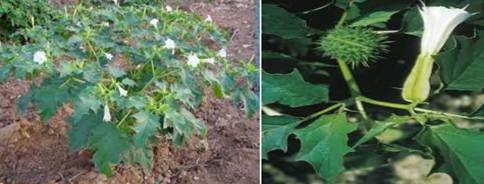
Figure 1: Images of the Datura stramonium plant
METHODS
A descriptive, cross-sectional, and retrospective case series study was conducted. All patients with acute poisoning from the consumption of Datura stramonium for abuse purposes who were treated during two mass poisoning events in Angola in 2021 were included: the first in Luanda province (n=15) and the second in Malanje province (n=6), for a total of 21 patients. Data analysis was performed between January and June 2025.
Patients were initially treated at various hospitals in the aforementioned provinces, with medical-toxicological consultation from the Drug and Toxicology Research and Information Center, located in Malanje. This center provides 24-hour nationwide coverage via telephone consultation, but a toll-free number is not available.
Inclusion criteria: confirmed acute poisoning from the consumption of Datura stramonium for abuse purposes, treatment during the 2021 mass poisoning events, and a complete and available medical record.
Exclusion criteria: accidental poisoning by the same plant, concomitant use of other substances that could explain the clinical manifestations, and incomplete or illegible medical history.
The variables studied were: province of occurrence, age (grouped into ten-year ranges), personal medical history (hypertension, bronchial asthma, or apparently healthy), substance use (cigarettes/tobacco, coffee, alcoholic beverages, drugs of abuse), clinical manifestations, and clinical course.
Clinical manifestations were classified into three categories:
· Mild: mydriasis, tachycardia, dry skin, xerostomia, mild agitation
· Moderate: spatial and temporal disorientation, hallucinations, incoherent speech, ataxia
· Severe: seizures, deep coma (Glasgow Coma Scale ≤ 8), ventricular arrhythmias, atrial fibrillation, hypertensive crisis, shock, or apnea
The outcome was categorized as favorable (medical discharge without sequelae or with minimal sequelae) or unfavorable (death or severe neurological sequelae).
Data were obtained from a systematic review of medical records, recorded in standardized files, and processed using Microsoft Excel 2010. Absolute and relative frequencies (percentages) and case fatality rates were calculated for each event.
Ethical Considerations
The study was approved by the Ethics Committee and the Scientific Council of the Drug and Toxicology Research and Information Center. Data confidentiality was guaranteed in accordance with the Declaration of Helsinki.(9)
RESULTS
Twenty-one patients poisoned by Datura stramonium were included, distributed across two mass outbreaks: 15 patients (71.4%) in Luanda Province and 6 patients (28.6%) in Malanje Province. Table 1 presents the sociobiological characteristics of the series. The most affected age group was 11–20 years (42.8%), followed by the 21–30 age group (33.3%). The majority of patients were apparently healthy (71.4%); among the documented medical histories, hypertension predominated (23.8%). Regarding substance use, drug abuse was the most prevalent (95.2%), followed by alcohol consumption (81.0%).
Table 1. Sociobiological characteristics of patients treated for massive Datura stramonium poisoning
|
Variables |
n |
% |
|
Province |
||
|
Luanda |
15 |
71,4 |
|
Malanje |
6 |
28,6 |
|
Age (years) |
||
|
11-20 |
9 |
42,8 |
|
21-30 |
7 |
33,3 |
|
31-40 |
1 |
4,8 |
|
41-50 |
3 |
14,3 |
|
51-60 |
1 |
4,8 |
|
Personal medical history |
||
|
High blood pressure |
5 |
23,8 |
|
Bronchial asthma |
1 |
4,8 |
|
Apparently healthy |
15 |
71,4 |
|
Toxic habits * |
||
|
Cigarettes/tobacco |
11 |
52,4 |
|
Coffee |
9 |
42,9 |
|
Alcoholic beverages |
17 |
81,0 |
|
Drugs of abuse |
20 |
95,2 |
Source: Statistics Department, Center for Drug and Toxicology Research and Information
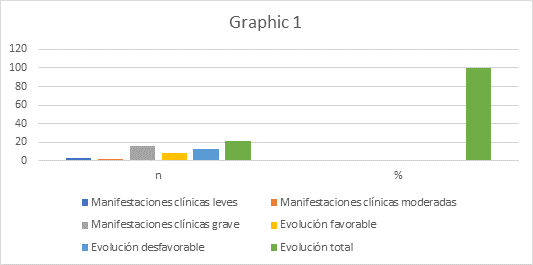
Figure 1 shows the distribution of patients treated during the two mass casualty incidents according to clinical manifestations and clinical course. Most of these patients presented with severe clinical manifestations (n=16; 76.1%). These included seizures, deep coma, ventricular arrhythmias, and hypertensive crises. The overall outcome was unfavorable in 13 patients (61.9%). A marked difference was observed between provinces: a case fatality rate of 86.7% in Luanda (13/15) versus 0% in Malanje (0/6) (p < 0.001). Patients in Malanje presented with less severe manifestations, received medical attention more quickly after ingestion, and had a favorable outcome.
Figure 1. Distribution of patients treated during mass casualty incidents according to clinical manifestations and clinical course
Source: own elaboration
DISCUSSION
Developed countries have the healthcare and logistical resources to respond to adverse drug reactions (ADRs). This reality is affected in developing countries by structural logistical limitations. This is the case of Angola, a developing country in Africa, whose strength lies in the medical toxicological advice provided by Cuban and Angolan professionals at the Drug and Toxicology Research and Information Center, available year-round, 24 hours a day. (8) However, when consultations are conducted by telephone, the attending physician bears the cost. According to the authors, the lack of a toll-free number at the center is a weakness.
According to the authors, the most frequent causative agents in ADRs are likely food and chemical products. In addition, they believe that these instances of substance abuse, where the causative agent was plants consumed for abuse purposes, are related to the low economic status of the consumers who resort to less expensive substances, in this case Datura stramonium, a plant with hallucinogenic effects. (7,10,11) Furthermore, it is important to mention that this plant has a wide distribution throughout the country, making it readily available and facilitating consumption as described in the research.
The results of this research differ from those found by Restrepo-Betancur (12), whose most commonly used drugs were cannabis, opioids, cocaine, and amphetamine. Castro-Jalca et al. (13) found in their research that the most commonly used drugs were marijuana, tobacco, alcohol, cocaine, and heroin. In this regard, Pérez Barly et al. (14) stated that marijuana is the most prevalent illegal drug (28.6%), while cocaine, methamphetamines, heroin, ecstasy, mushrooms, and others accounted for approximately 4% of consumption for the purpose of abuse.
The prevalence of drug use by age group, as determined in this research, coincides with findings from other studies, where adolescents and young adults have the highest incidence and prevalence compared to other age groups. (15) Guirola-Fuentes (2) suggested that drug use begins in adolescence and continues into later life.
The authors observed, in relation to the personal medical history of the study population, patients diagnosed with hypertension and bronchial asthma; however, apparently healthy patients, characteristic of adolescents and young adults, predominated.
On the other hand, severe clinical manifestations predominated in the patients from the two mass poisoning events, with a negative outcome in most cases. It is necessary to describe the typical clinical picture of acute Datura stramonium poisoning (anticholinergic syndrome): mydriasis, tachycardia, dry skin, hallucinations, and agitation. In the most severe cases, the clinical manifestations described above, as well as others, may be present. All of this, related to the blockade of muscarinic receptors, leads to a state of autonomic and neurological dysregulation, the manifestations of which compromise the patient's life, even though apparently healthy patients predominated in the study. (4,5,6)
Furthermore, the authors consider that these patients consumed a high dose of the plant, primarily the seeds, which contain a high concentration of the plant's active ingredients. Added to this, some patients presented comorbidities such as hypertension, all of which were determining factors in triggering severe clinical conditions. Moreover, to prevent the severity of these illnesses, the patients should have received early toxicological medical attention, which did not occur in these cases. (6,7)
Finally, the authors believe that, from a toxicological point of view, the toxicokinetic characteristics of the plant also influenced the patients' unfavorable outcome. Rapid absorption is described, with symptoms appearing 1 hour after ingestion. It is distributed throughout the body, crosses the placental and blood-brain barriers, and is metabolized by the liver and excreted by the kidneys. However, symptoms are prolonged due to slow gastric emptying caused by the anticholinergic effect. (6)
It is also important to mention that the team of professionals at the Center for Drug and Toxicology Research and Information undertook the necessary preventive actions in mass media, schools, and communities to avoid situations like those addressed in this research. Furthermore, they provided toxicology training to healthcare professionals in the country's provinces, covering the diagnosis and treatment of acute poisonings from substances of abuse.
The presence of atropine and scopolamine could not be detected in urine. Patients involved in mass poisoning from the consumption of Datura stramonium for abuse purposes were treated at different hospitals, which are considered limitations of this study.
CONCLUSIONS
Mass poisoning from the consumption of Datura stramonium for abuse purposes constitutes a preventable health problem. Effectively addressing these situations requires going beyond the treatment of the acute event and must be framed within a strategy of health promotion and prevention of substance abuse, with community participation and intersectoral action, including health authorities.
BIBLIOGRAPHIC REFERENCES
1- Galarza Schoenfeld AS, López Mero PJ, Pibaque Tigua MC, Collantes Zavala AJ. Percepción de riesgo sobre el consumo de drogas en estudiantes universitarios. Rev Cubana Med Milit [Internet]. 2024 [cited 10/01/2026];53(1). Available in: https://revmedmilitar.sld.cu/index.php/mil/article/view/25854
2- Guirola-Fuentes J, Batista-Reyes Y, Valiente-Carpio A, Pérez-Barly L, Martínez-Báez AI, Rodríguez-León A. Nivel de conocimiento sobre los efectos nocivos del tabaco en los adolescentes. MedEst [Internet]. 2024 [cited 10/01/2026]; 4(3):e234. Available in: https://revmedest.sld.cu/index.php/medest/article/view/234
3- Guirola-Fuentes J, Salgado-Cruz M, Fleites-Mestres PR. Evolución de los accidentes químicos e intoxicaciones masivas en Cuba: un análisis de 2010-2024. MedEst [Internet]. 2025 [cited 10/01/2026]; 5:e315. Available in: https://revmedest.sld.cu/index.php/medest/article/view/315
4- Aćimović M. Datura stramonium - A Dangerous Weed and Alternative Drug of Abuse: An Overview of Poisoning Cases in 21st Century. Planta Med. 2025;91(6-07):353-370. doi: 10.1055/a-2552-4434.
5- González Díaz E. Plantas tóxicas: ¿cuáles son las más problemáticas? [Tesis de grado]. Sevilla: Universidad de Sevilla; 2023. [cited 10/01/2026]. Available in: https://idus.us.es/server/api/core/bitstreams/9f61a3aa-9619-4e24-8d02-e4f3cfa13dbc/content
6- Hoffman RS, Gosselin S, Nelson LS, Lewin NA, Howland MA, Smith SW, et al. Goldfrank's Clinical Manual of Toxicologic Emergencies [Internet]. 2nd ed. New York: McGraw Hill; 2023 [cited 10/01/2026]. 800 p. Available in: https://copharm.uobaghdad.edu.iq/wp-content/uploads/sites/6/2020/09/Goldfrank's-Toxicologic-Emergencies-9th-Edition.pdf
7- Xiaquizembe José Luís Luís F. Capassarinho/Datura Stramonium - Apelo as autoridades para ocontrolo erestrição. Revista Samanyonga [Internet]. 2025 [cited 10/01/2026]; 4(1):29-46. Available in: http://www.revista-samayonga.ao/index.php/inicio/article/view/84
8- Pedro Neto A, Torres Alemánet MA, Ruiz ArciaI, Cantelar de FranciscoN, Cathcart RocaF, Simóes de OliveiraPR et al. Comportamiento de algunos factores de riesgo de intoxicaciones agudas en la población de Malanje, Angola. Rev haban cienc méd [Internet]. 2014 [cited 10/01/2026]; 13(2): 357-367. Available in: http://scielo.sld.cu/scielo.php?script=sci_arttext&pid=S1729-519X2014000200019
9- Rodríguez Puga R. Actualización de la Declaración de Helsinki, avances en ética y protección de la investigación médica. Rev Cuban Salud Trabajo [Internet]. 2025 [cited 10/01/2026];26. Available in: https://revsaludtrabajo.sld.cu/index.revsyt/article/view/917
10- Ziaja A, Niedzielska-Andres E, Ciszowski K, Pomierny-Chamioło L. Plant-derived hallucinogens: neuropharmacological properties and psychoactive mechanisms - a narrative review. Folia Med Cracov. 2025 May 30 ;65(1):35-47. doi: 10.24425/fmc.2024.153284.
11- Hakkoymaz H, Gedik MS, Kilci Aİ, Bulbul E, Tatlı M. Case Report of Datura Intoxication in The Emergency Department. Eurasian J Tox [Internet]. 2022 [cited 10/01/2026]; 1;4(3):93-5. Available in: https://izlik.org/JA98TJ84WJ
12. Restrepo-Betancur L. Análisis comparativo entre regiones del mundo relacionado con el consumo de sustancias psicoactivas en las últimas tres décadas. Psychologia Avances de la Disciplina [Internet]. 2024 [cited 10/01/2026]; 18(1):61-71. Available in: https://doi.org/10.21500/19002386.6552
13. Castro-Jalca AD, Jaya-Campos DM, Párraga-Cedeño AA. Consecuencias físicas y psicológicas por consumo de drogas en adolescentes. MQR Investigar [Internet]. 2023 [cited 10/01/2026]; 7(4):388-418. Available in: https://doi.org/10.56048/MQR2022.7.4.2023.388-418
14. Pérez Barly L, Guirola Fuentes J, García González Y, Díaz Machado A, Mastrapa Ochoa H, Torres Ruiz JR. Nivel de conocimientos sobre los daños del consumo de drogas en adolescentes. Rev Cub Med Mil [Internet]. 2019 [cited 10/01/2026]; 48(4). Available in: http://scielo.sld.cu/scielo.php?script=sci_arttext&pid=S0138-65572019000400008&lng=es
15. Bouzón A, Zych I. Variables escolares y consumo de drogas en la adolescencia y adultez: un estudio retrospectivo. Psicología Educativa [Internet]. 2023 [citado 10/01/2026]; 29(2):177-184. Available in: https://doi.org/10.5093/psed2023a11
AUTHORSHIP CONTRIBUTION
JGF: Conceptualization, research, methodology, data collection, formal analysis (quantitative and qualitative), drafting, revision, and editing.
YBR: Conceptualization, research, methodology, data collection, drafting, revision, and editing.
YGG: Conceptualization, research, methodology, data collection, drafting, revision, and editing.
YMG: Research, methodology, data collection, revision, and editing.
CONFLICTS OF INTEREST
The authors declare no conflict of interest.
FUNDING SOURCES
The authors received no funding for this article.
USE OF ARTIFICIAL INTELLIGENCE
The authors declare that no artificial intelligence was used in the writing of this manuscript.